

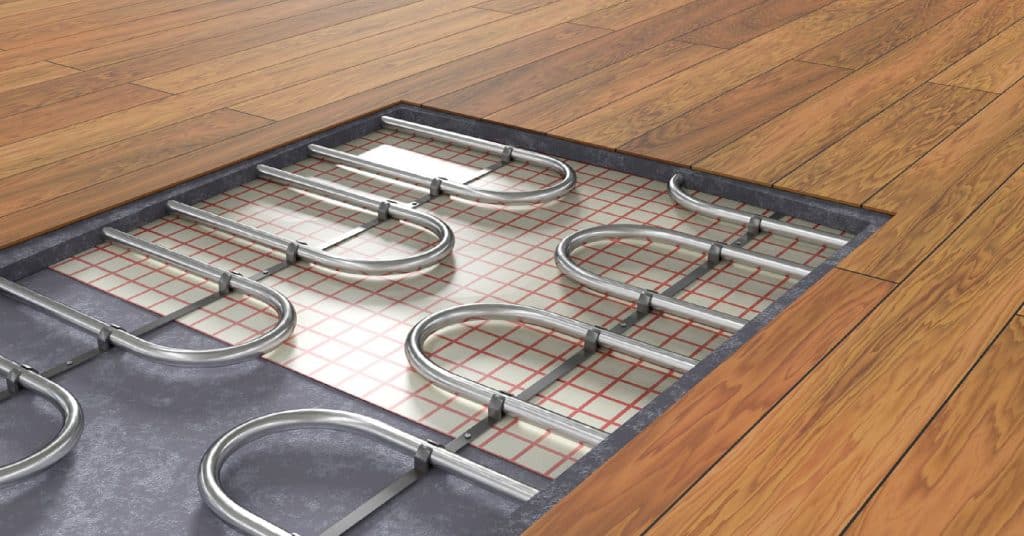
Underfloor heating is often seen as a modern upgrade, but it’s also a practical and energy-efficient way to heat a home. By distributing warmth evenly across a room from beneath the floor, it removes the need for bulky radiators and helps maintain a comfortable temperature throughout the day. Understanding the underfloor heating installation process can make it easier to plan a renovation or improve an existing heating setup.
There are different systems to choose from, each suited to different homes and flooring types, and the right option can lead to long-term energy savings and improved comfort.
This guide covers the best underfloor heating types available, how they work, which rooms they’re suited to, and the key benefits of installing them. You’ll also find practical information on running costs, installation timelines, and seasonal underfloor heating offers that can help make the switch more affordable.
What is underfloor heating?
Underfloor heating is a modern heating solution that uses radiant heat to warm a room from the ground up. Unlike traditional central heating systems that rely on radiators to heat the air, underfloor heating warms the surfaces and objects in a space, creating a more consistent temperature throughout. This method not only improves comfort but also enhances energy efficiency, as it operates at lower temperatures while still achieving the same level of warmth.
Read More: Underfloor Heating vs Radiators: Which Is Best for Your Home?
What are the different types of underfloor heating?
There are two main types of underfloor heating:
- Water underfloor heating or wet underfloor heating systems
- Electric underfloor heating systems
Water underfloor heating connects to your central heating via plastic pipes that run through the floor. Electric underfloor heating uses electricity via fitted cables.
See Also: 10 Signs Your Central Heating System Needs Servicing
Both are installed beneath the flooring and hidden from view, freeing up wall space and giving rooms a cleaner, more streamlined appearance. Underfloor heating is compatible with a wide range of floor coverings, including tile, stone, laminate, vinyl, and even carpet (as long as the TOG rating is low enough to allow effective heat transfer).
Refresh your home with spring renovations.
How long does underfloor heating take to warm up?
Depending on the type of underfloor heating you have, it can heat up in as little as 30 minutes. During the winter months, most people choose to leave their underfloor heating on for longer on a low temperature.
Which rooms can you get underfloor heating in?
Depending on the structure of your house, underfloor heating can be fitted in most rooms, under many different types of flooring, including:
- Stone
- Tile
- Laminate
- Vinyl
- Carpet and rug flooring (with low TOG value)
An underfloor heating installation can be completed on both the ground and upper floors or your home. The most popular room for underfloor heating installation is the bathroom, to keep your feet nice and toasty!
Lazard’s Upminster underfloor heating services are specialist services available for all homes and commercial buildings in the area.
What are the benefits of underfloor heating?
There are many benefits to underfloor heating, including:
- Once installed, it’s very low maintenance
- Underfloor heating works at a lower temperature so can reduce your energy bills
- It distributed heat evenly around each room
- It’s hidden under the floor and takes no wall space compared with bulky radiators
- Underfloor heating makes your home cosy and is safe for children and pets
Start your bathroom transformation today
How is underfloor heating installed?
The underfloor heating installation process varies depending on the type of system you choose. The two main options are water underfloor heating systems (also known as wet systems) and electric systems (or dry systems).
To install wet underfloor heating, a network of flexible pipes is laid beneath the floor and connected to your existing boiler or a heat pump. This type of system circulates warm water through the pipes to gently heat the room from the ground up.
A wet underfloor heating installation typically requires the existing floor to be removed or a new floor structure to be built, followed by the installation of insulation boards to reduce heat loss and ensure efficient operation. It’s a more involved process than electric systems, often used in new builds or major renovations, but it’s generally more cost-effective to run in the long term.
Electric systems involve fitting a series of heating cables or mats beneath the flooring. These are connected to your home’s electrical system and controlled via a thermostat. Electric underfloor heating is quicker and easier to install, making it ideal for single-room projects or retrofitting in smaller areas. However, it can be more expensive to run compared to wet systems, depending on electricity prices and usage.
The best underfloor heating system for your home will depend on factors such as your budget, property type, insulation levels, and whether the installation is part of a larger renovation. It’s always recommended to consult a professional installer who can assess your needs and suggest the most suitable solution.
How much does underfloor heating cost?
There are three cost areas to underfloor heating: System costs, installation costs and running costs. Things to consider:
- Dry systems can be a lot more expensive to run than wet
- The installation cost depends on how the system you are installing and how many rooms you have
- Underfloor heating can offer substantially lower running costs compared to traditional central heating
Join our annual plumbing cover plan.
What underfloor heating services do Lazard Plumbing offer?
At Lazard Plumbing, we can support you with your underfloor heating installation. Our services include:
- Water underfloor heating
- Design, installations and repairs
- Single room underfloor heating
- Multi-zone underfloor heating
- WIFI smart thermostats and controls
- 20mm insulations boards
- Underfloor heating for tiles, wood, vinyl and carpet
- Extensions underfloor heating
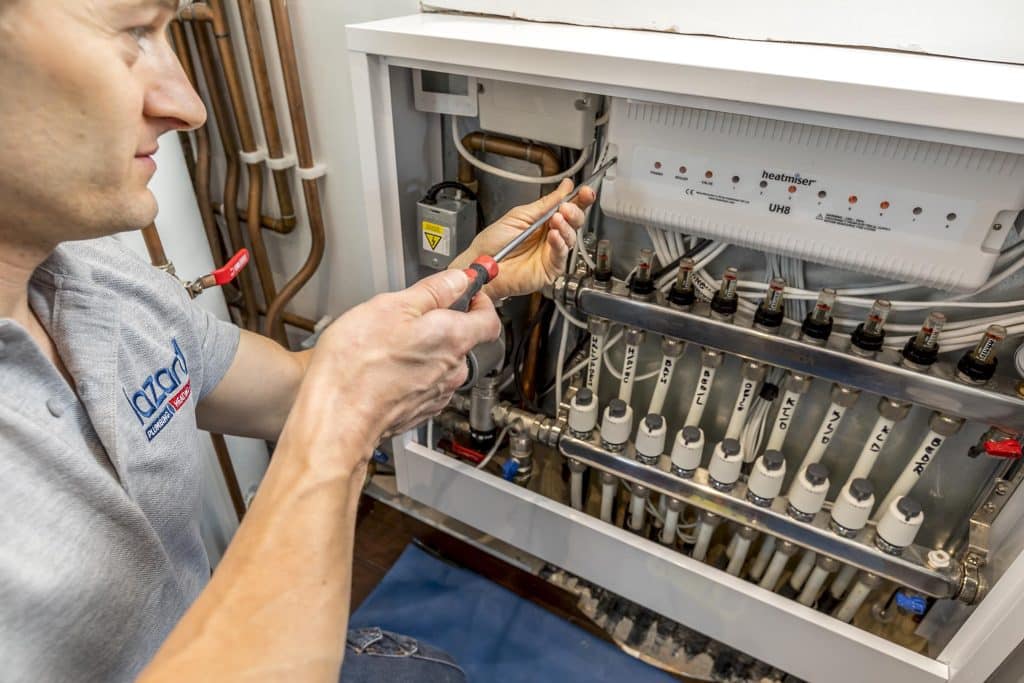
- Manifold repairs and installations
- Actuators and wiring centres replacements
- Underfloor heating as part of a home renovation
We love helping our customers make the move to efficient underfloor heating, and we’re confident we can help you too. Our team plan, install, and service bespoke underfloor heating solutions, so you can kick off your slippers!
Looking for Professional & Reliable Underfloor Heating Installation?
You can expect prompt and professional service every time, with the work carried out by our friendly and reliable team. All works completed by us are covered under our 24-month guarantee, so if anything goes wrong, we’ll be back to put it right.
Whether your home is in need of plumbing, underfloor heating installation, gas boiler installation or bathroom refurbs, we can help.
For complete peace of mind home plumbing solutions in Hornchurch, Essex and surrounding areas, contact our friendly team on 01708 502 346
FAQs
Is installing underfloor heating disruptive?
Installing underfloor heating can vary in complexity depending on the system and the property. For warm water underfloor heating (wet systems), the installation process is more involved and often requires the removal or adjustment of your current floor surface. This is why it’s commonly done during major renovations or new builds. Electric underfloor heating works well for smaller spaces and is quicker to install using heating mats that sit directly beneath your floor finish. In either case, using a qualified heating engineer ensures the system is fitted safely and efficiently with minimal disruption.
How does underfloor heating operate compared to traditional radiator systems?
Underfloor heating operates by distributing warmth evenly across the floor, creating a steady and consistent temperature throughout the room. In contrast, traditional radiator systems heat the air around them, which can create hot and cold spots and uneven heating. Underfloor systems, particularly energy efficient systems like warm water underfloor heating, work at lower temperatures and are often more cost-effective to run over time.
Can underfloor heating be used with any floor surface?
Yes, underfloor heating is compatible with most floor surfaces, including tile, stone, laminate, vinyl, and carpet (provided it has a suitable TOG rating). The effectiveness of the system can vary depending on the material, so it’s important to choose flooring that conducts heat well. A professional heating engineer can advise on the best pairing for your chosen heating system and flooring type.