


Planning a bathroom remodel in the UK requires prioritising plumbing considerations before selecting attractive bathroom design elements. The secret to a successful renovation lies in understanding that your plumbing infrastructure shapes what’s possible, not just what looks good on a Pinterest board.
Start by checking your water pressure, at least 1 bar is required for most fixtures, and map existing pipework to avoid costly relocations, which can add £1,500–£3,000 to your project. Make sure any changes comply with UK Building Regulations Part H for drainage and Part P for electrical safety.
With careful planning, you’ll create a dream bathroom that is not only beautiful but fully functional for everyday family life.
Assessing Your Current Plumbing Infrastructure
Bathroom remodel planning requires a thorough assessment of your existing bathroom plumbing system, as it determines the feasibility and cost of your renovation project. Begin by evaluating water pressure: UK water companies must provide a minimum of 1.0 bar pressure at the boundary, and a flow rate above 15 litres per minute suggests excellent service. Test using a 10-litre bucket under a tap, if it fills in under 40 seconds, your system provides a good flow.
Next, check your pipe material. Older homes, especially those over 100 years old, may have original copper or even lead pipes, which often need upgrading to plastic for compatibility and compliance. Remember that the average maintenance cost for homes of this age is around £2,800 yearly, and plumbing upgrades can make a substantial improvement to safety and efficiency.
Identifying the soil pipe’s location is crucial, especially if you want to reposition the toilet or create a new shower room. The closer you keep new fixtures to these pipes, the less you’ll pay in labour and materials. Evaluate waste pipes for accessibility and ensure there’s the correct drainage fall, as required by regulations. Understanding your current bathroom layout and plumbing foundation streamlines decision-making and can save thousands by minimising unnecessary changes.
Ultimately, a thorough assessment ensures your bathroom renovation project starts from a strong and reliable base, enabling more creative bathroom ideas later in the process.
Water Pressure and Flow Rate Requirements
A reliable water system provides adequate pressure and flow, establishing comfort and utility within your own bathroom. All UK properties must have a minimum of 1 bar pressure, which is equal to a 10-metre vertical distance between the cold tank and the shower head in gravity-fed systems. Testing is easy: time how long it takes to fill a 10-litre bucket. Filling in 40 seconds equates to 15 LPM, more than enough for most showers, including popular walk-in shower designs.
Understanding your system type is essential. Combi boilers deliver high pressure directly; gravity-fed systems, common in old bathrooms, may require pumps or upgrades for modern shower enclosures or freestanding baths. If you’re dreaming of a larger shower or double vanity, check both pressure and flow before selecting new bathroom fixtures for your dream bathroom.
Existing Pipe Location Mapping
Pipe location directly influences your bathroom layout possibilities. Measuring and recording hot and cold supply pipes, soil stacks, and waste lines helps you and your bathroom designer create a functional space that minimises wasted space and maximises storage space. Movement of major pipework can be one of the biggest cost factors, especially in large room renovations.
- Identify all hot and cold water supply points.
- Locate waste pipe runs and ensure correct gradients for proper drainage.
- Map soil stack positions, a must for toilets and wall hung designs.
- Mark access hatches for future maintenance, like underfloor heating repairs or valve changes.
Investing time in documenting the existing space helps reduce layout reconfiguration costs and keeps your bathroom renovation project efficient and on budget.
UK Building Regulations for Bathroom Plumbing
UK building regulations ensure bathroom safety compliance, protecting your home’s value and your family. Renovations must comply with several important sections:
- Part F (ventilation): Provide at least 15 litres/sec extraction for intermittent use, and 8 litres/sec for continuous, with ventilator pipes extending 900mm above openings within 3m.
- Part H (drainage): All pipework must be accessible, airtight, and meet strict gradient requirements for waste flow.
- Part P (electrical safety): Only qualified, certified electricians may perform electrical installations in bathrooms.
- Part A (structural): Always assess floor loading before installing heavy baths or tile floors.
New bathrooms in extensions require building control approval, ensuring work meets all current standards. Regulatory compliance forms the foundation for safe, legal bathroom installations and preserves the value of your new space.
Drainage and Waste Disposal Standards (Part H)
Your drainage system must comply with Part H requirements to ensure safety and ease of maintenance. All pipework must remain accessible for future blockage removal, waste pipes must be airtight, and correct gradients are vital for proper flow. Connections should only be made to approved waste disposal systems, preventing leaks and odours. Ventilation pipes must be positioned well above building openings to safeguard air quality.
Effective waste disposal not only meets regulations but also boosts the longevity of bathroom floors and avoids damage to surrounding walls.
Electrical Safety Compliance (Part P)
Electrical installation in bathrooms requires a qualified professional. All sockets must be at least 3 metres from a water source, and only certified (NICEIC or ECA approved) electricians may work on bathroom lighting, electric underfloor heating or shower control systems. Ground Fault Circuit Interrupters (GFCIs) are mandatory for all outlets.
Don’t overlook this step: proper certification and notification to building control protects you, your insurance, and your bathroom remodel investment.
First Fix vs Second Fix Plumbing Planning
Plumbing installation follows a two-stage process: first fix, then second fix. The first fix occurs early, before boarding and plastering, and includes installing hidden infrastructure such as water and waste pipework. Second fix happens once walls are finished, a phase for connecting and testing visible fixtures like baths, basins, and heated towel rails.
First fix plumbing in the UK typically costs £1,500–£3,000 and takes place over days 3–5 of a standard two-week installation. Second fix, including connecting new fixtures and commissioning the system, happens between days 10 and 11. Coordinating timelines with other trades and ensuring all components are scheduled for delivery ensures your bathroom renovation remains on track.
First Fix Plumbing Requirements
During the first fix phase, hidden infrastructure is put in place. Plumbers install all hot and cold water pipes, route and connect waste pipes, and position soil stacks for toilets and wall mounted fixtures. Pressure testing occurs before walls are closed, guaranteeing leak-free foundations for your new bathroom. Attention to detail during the first fix forms the backbone of a reliable family bathroom.
Second Fix Installation Coordination
The second fix stage connects the visible fixtures: bath and shower installations, double vanity units, taps, and all bathroom lighting. Electricians and plumbers must work in tandem to ensure correct fitting and system operation. Systems are rigorously tested for leaks, pressure, and correct function before tiling and final finishes. This stage is also ideal for finalising extractor fan installation and completing decorative touches like wall coverings and floor tiles.
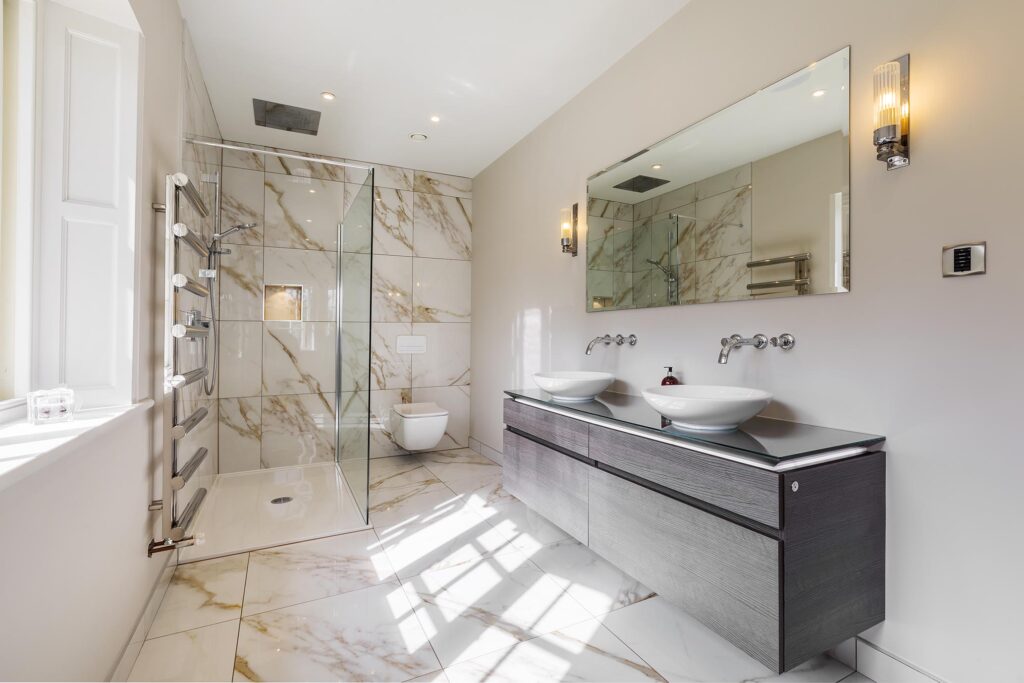
Budget Planning for Plumbing Work
Strategic plumbing budget allocation determines your project scope. Standard UK bathroom plumbing costs range from £1,500–£3,000 for typical installations, and electrical work can add £900–£3,000 depending on complexity. Tackling a layout reconfiguration or moving soil stacks increases both material and labour costs.
Working with the existing layout is the best way to achieve substantial savings. London residents should budget 10–20% more. Always allow 10–20% contingency for unexpected challenges, such as pipe upgrades or floor reinforcement.
| Service Type | Basic Cost Range | Premium Cost Range | Complexity Factors |
| Standard Suite Installation | £1,500–£2,000 | £2,500–£3,000 | Existing layout |
| Layout Reconfiguration | £2,500–£4,000 | £4,500–£6,000 | Pipe relocation |
| First Fix Plumbing | £1,200–£2,000 | £2,500–£3,000 | Access difficulty |
| Electrical Work | £900+ | £1,500+ | New circuits required |
The average full UK bathroom renovation costs £5,000–£7,000. Clear, transparent pricing protects your budget, and working with a qualified professional guarantees compliance and warranty coverage.
Professional vs DIY Analysis
Choosing professional installation affects total project cost but provides clear benefits. Using a professional plumber includes regulatory certification, insurance, and compliance with building regulations. DIY is limited: electrical and gas work require specialists. Certification and building control fees also add to the budget, but long-term warranties and insurance protection offer peace of mind.

Hidden Cost Considerations
Renovation projects often reveal unexpected expenses beneath the old floor or bathroom walls. Common issues include replacing pipes damaged by limescale, reinforcing floors for freestanding baths, creating access for hidden infrastructure like underfloor heating, and covering waste disposal costs for old tiles and fixtures. Always budget extra for these variables to keep your renovation plans on track.
Timeline and Project Management
A structured bathroom renovation timeline ensures your project is completed efficiently, with minimal household disruption. Simple refreshes may take 3–5 working days, standard refits need 6–8, while complex refurbishments with layout changes can span 3–8 weeks. Factors like design complexity, material lead times, or structural work (for a large walk in shower or electric underfloor heating) influence duration. Households with only one family bathroom should plan alternative washing arrangements.
70% of installations experience delays due to poor preparation, organising site access, confirming delivery of fixtures, and arranging utility isolations in advance all prevent setbacks and wasted space.
Pre-Installation Preparation
A well-prepared bathroom site prevents delays. Clear and protect the space before work begins, confirm all materials and floor tiles are on site, and set up temporary washing and toilet facilities for the family. Isolate utilities and check project readiness with your senior designer or installer before day 1.
Managing Renovation Disruption
Managing the renovation process means planning for alternative washing, containing dust, and communicating regularly with contractors. Monitor progress and address issues early, quality control checks at each phase ensure nothing is missed before sign-off. Good planning minimises disruption in one of the smallest rooms in the house.
Common Plumbing Planning Mistakes to Avoid
Planning mistakes cause costly problems and long-term frustration in your new bathroom. Avoid these common plumbing problems for a successful renovation:
- Failing to check water pressure before choosing high-performance shower heads.
- Placing toilets without considering soil stack proximity, resulting in expensive pipework moves.
- Skimping on ventilation, leading to damp walls and mould.
- Attempting DIY electrical work, always hire a certified professional.
- Concealing all pipework without maintenance hatches.
- Choosing MDF vanity units or black fixtures (which show limescale) in high-moisture environments.
- Neglecting space for underfloor heating access points and storage solutions.
Learning from these mistakes secures lasting value and a smoother renovation journey.

Layout and Space Planning Errors
Practical bathroom remodels avoid space and functionality issues by maintaining minimum clearances between fixtures, considering door swings, and integrating storage efficiently. Optimise traffic flow, especially in guest or family bathrooms, to keep the functional space open and inviting.
Technical Specification Mistakes
Technical planning prevents installation problems. Always confirm system compatibility for new fixtures, check electrical capacity for heated towel rails and recessed spotlights, and size your extractor fan to suit the room’s volume. Waterproof all wet areas, especially walk in showers and around double vanities, to protect against leaks and maintain a hygienic environment.
Selecting Professional Services
Selecting the right professionals ensures a high-quality bathroom installation. Choose WaterSafe-registered plumbers and NICEIC- or ECA-certified electricians for all regulated work. Check credentials on platforms like Checkatrade or MyBuilder, ask for at least three detailed quotes, and verify insurance and warranty coverage for new fixtures and flooring.
Verification and Credential Checking
Always confirm WaterSafe and Gas Safe registrations. For electrical work, insist on NICEIC or ECA certification, and verify public liability insurance. Request references or a portfolio of completed projects, seeing examples of recent bathroom renovation work illustrates both competence and style.
Closing Thoughts
Thorough planning with plumbing considerations as the foundation ensures successful bathroom renovations that meet UK regulations, optimise functionality, and provide lasting value for homeowners.
Ready to create your dream bathroom? Whether your home is in need of a plumber for bathroom renovations, plumbing, underfloor heating, gas boiler installation and central heating or power flushing , we can help.
For complete peace of mind home plumbing solutions in Hornchurch, Essex and surrounding areas, contact our friendly team today!
FAQs
1. What does a bathroom remodel typically involve, and how can an interior designer help with design ideas and creating a mood board?
A bathroom remodel often includes plumbing upgrades, electrical work, installation of new fixtures, tiling, and layout adjustments. Working with an interior designer streamlines the process by helping you develop innovative design ideas, select appropriate materials, and create mood boards that visualise colour schemes and style inspiration. Mood boards are valuable for clarifying your vision, guiding fixture and finish selections, and ensuring every detail, from focal points to complementary hues, cohesively transforms the space.
2. What are important design considerations for a guest bathroom, especially regarding natural light and lighting fixtures?
Guest bathrooms should feel inviting and practical, even in compact layouts. Maximising natural light through windows, skylights, or reflective surfaces helps the space feel brighter and more spacious. Combine ambient lighting (ceiling fixtures), task lighting (vanity lights), and accent lighting (for mood or highlighting design features) to ensure the bathroom is functional for guests and visually appealing. Large mirrors and light colour palettes reflect natural light, while modern lighting fixtures add a contemporary touch and establish a welcoming atmosphere.
3. How do I choose a focal point when planning bathroom design, and what role does a mood board play?
Selecting a focal point, a standout feature such as a statement basin, bold tile wall, or eye-catching lighting fixture, anchors your bathroom’s design and guides your layout decisions. A mood board, curated with your chosen colours, finishes, and design inspirations, helps you and your designer visualise how individual elements contribute to the room’s style and atmosphere. This tool ensures that your focal point remains prominent while harmonising with other fixtures and décor, ultimately shaping a cohesive and attractive bathroom environment.